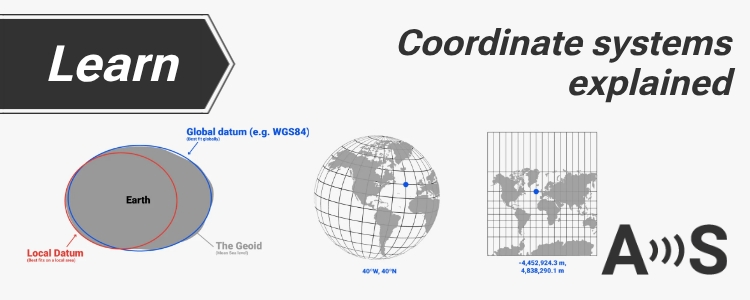
GNSS coordinate systems explained
Table of contents
GNSS coordinate systems explained Read More »
Can a low-cost GNSS antenna perform like a geodetic one? A research paper in GPS Solutions says: often yes — if you choose carefully. Imagine you’re in the field with a low-cost multi-band receiver (the kind many of us use every day). You’re doing everything “right”… but your results still vary more than expected. One
RTK Antenna comparison: low-cost vs high-end geodetic antennas Read More »
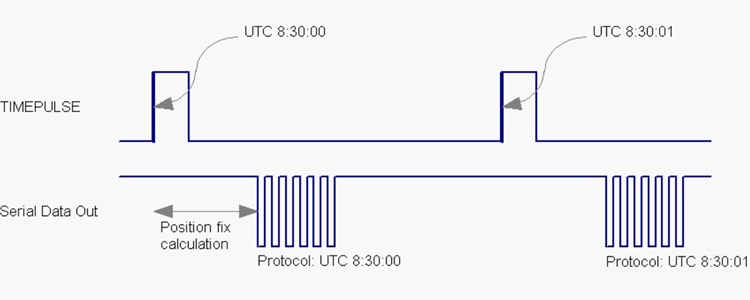
Forget for a moment about GPS position. A GPS or GNSS also calculates time. And it does it very accurately. As precise as 10 nanoseconds. This is 0.00000001 seconds. Imagine you have 2 devices in 2 different countries or 2 sensors in 2 different locations and you want to synchronize whichever action or measurement they
Understanding GPS Timepulse or PPS Read More »
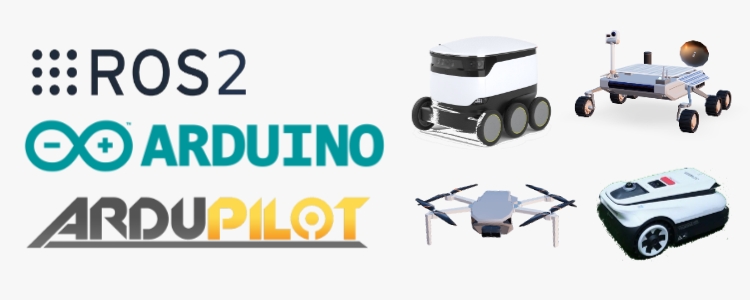
If you’re building an autonomous vehicle (whether it’s a ground rover, a drone, or a marine robot), choosing the right platform is key to speed up the project. This guide will help you compare and decide between 3 popular platforms: Arduino, ArduPilot and ROS 2. Before we start: some factors to consider Choosing the right
Land, sea, or air robots: how to choose the platform for project with GPS Read More »
If you need high-precision GNSS, you’ve probably come across the u-blox ZED-F9P and ZED-X20P modules. Both offer centimeter-level accuracy, but they offer different features for different users. Here’s a quick breakdown:
Comparison of u-blox ZED-F9P and ZED-X20P Read More »
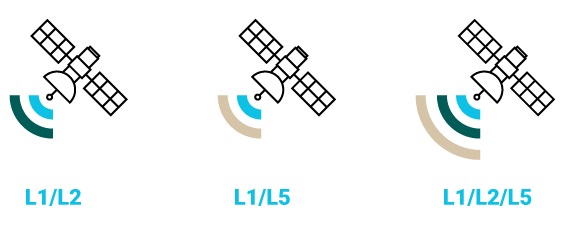
If you’re looking for a high-precision GNSS receiver, you’ve probably read the terms All-band, Quad-band, and Triple-band. Is there actually any difference? At ArduSimple we like to keep things simple, let’s use this short article to clear up this confusion. Triple-band vs. Quad-band vs. All-band RTK receivers: the real story We are sorry we need
All-band vs. Quad-band vs. Triple-band: What’s the real difference? Read More »
Achieving centimeter-level GNSS accuracy? It’s all about choosing the right method—Real-Time Kinematic (RTK) or Post-Processed Kinematic (PPK). Our new video dives into the technical differences to help you decide which is best for your project. We’ll look at distance limits, error detection, setup time, and data post-processing requirements. Discover why RTK has a 35 km limit
The differences between RTK and PPK. Which method is best for your use cases? Read More »
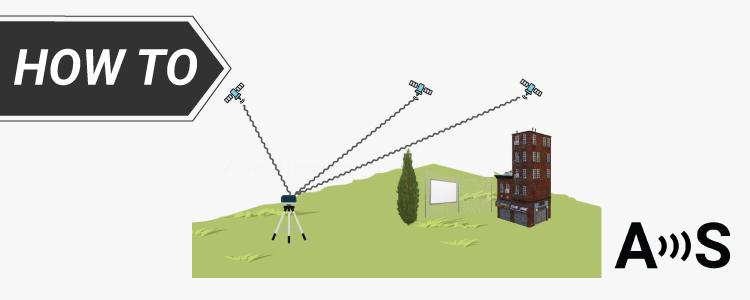
Ever wondered why your GNSS receiver’s accuracy fluctuates? Proper antenna installation is key, and even small errors can greatly impact your results. Our latest YouTube tutorial is here to guide you through the optimal setup of your GNSS antenna, ensuring you achieve the best possible accuracy. From avoiding signal obstructions like buildings and trees to
How to install a GPS/GNSS antenna for better performance Read More »
We’ve explained the different types of heights in the tutorial Ellipsoidal, Orthometric, and Geoid heights, and what they mean for your work. When taking measurements, you might find that the positional information appears accurate, but the height may not be correct. This error could arise from forgetting to input the height of your pole. Alternatively,
Geoid model for your country to measure orthometric height Read More »