RTK Antenna comparison: low-cost vs high-end geodetic antennas
Can a low-cost GNSS antenna perform like a geodetic one?
A research paper in GPS Solutions says: often yes — if you choose carefully.
Imagine you’re in the field with a low-cost multi-band receiver (the kind many of us use every day). You’re doing everything “right”… but your results still vary more than expected. One of the biggest reasons is surprisingly simple: the antenna matters more than most people think.
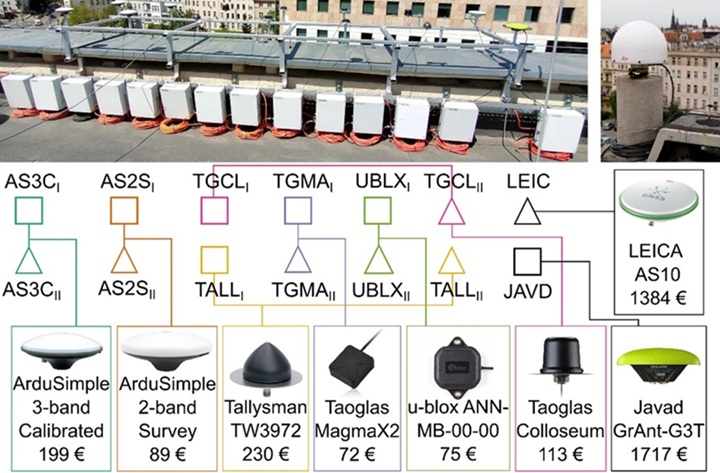
The paper compared one low-cost receiver connected to several popular low-cost antennas — alongside geodetic-grade references — to see how signal quality and final positioning actually change. And yes — ArduSimple antennas were part of the test.
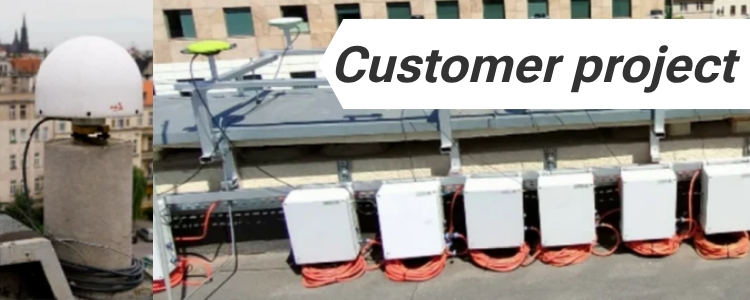
They built a rooftop test platform with many antennas placed side-by-side, recording at the same time, under the same sky. That matters because it makes the comparison fair: same satellites, same environment — only the antenna changes. They then looked at:
Signal strength: Measured as SNR in dB-Hz (think: “how confidently the receiver can hear the satellite”).
Multipath: That’s the “echo problem”: signals bouncing off surfaces before reaching your antenna. Multipath is one of the biggest hidden reasons for messy GNSS in real life.
Measurement noise: GNSS produces two main types of measurements:
Pseudorange (meter-level noisy, used for basic positioning)
Carrier phase (very precise—millimeter-level—but needs good tracking and ambiguity resolution)
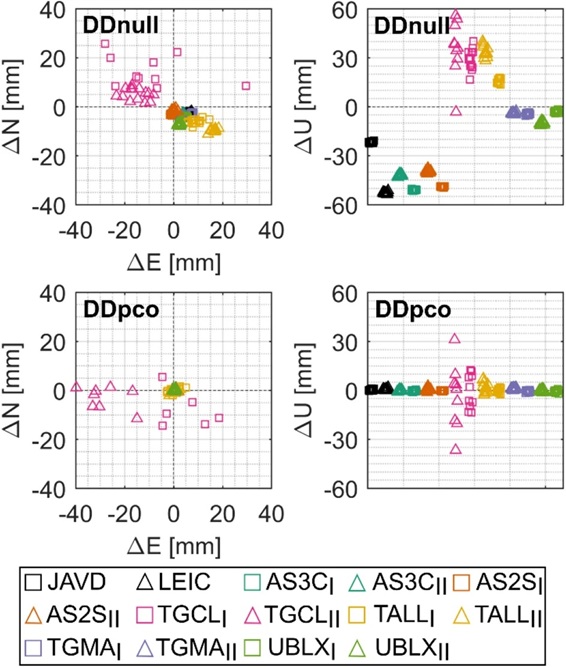
The antenna’s Phase Center Offset: The antenna does not measure from its physical center — it measures from an electrical phase center. That position changes with frequency and constellation.
Performance of ArduSimple Antennas
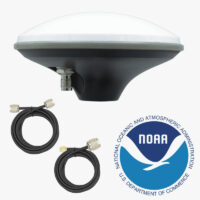
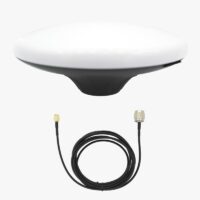
Among the tested low-cost antennas, the study reports that ArduSimple Budget Survey Multiband GNSS Antenna (AS2S) and Calibrated Survey Tripleband GNSS Antenna (AS3C) were among the best performers.
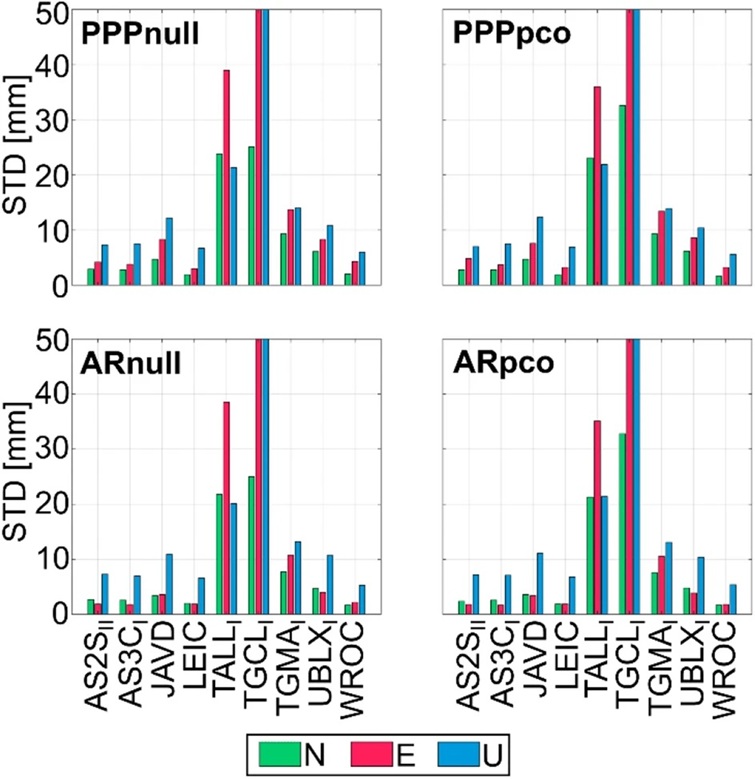
1. The positioning accuracy of ArduSimple antennas after proper calibration achieve ±2 mm millimeter-level horizontal accuracy and ±3 mm few-millimeter vertical consistency, comparable to the tested geodetic-grade antennas under open-sky conditions.
2. PPP with ambiguity resolution significantly improves repeatability for AS2S and AS3C, with fixing rates around 99%, similar to high-end geodetic systems.
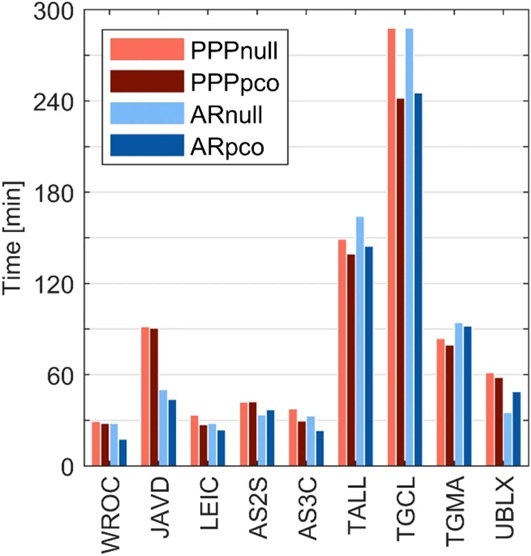
3. The convergence time to reach 5 cm accuracy is among the fastest for AS2S and AS3C within the low-cost group and close to the Leica reference antenna.
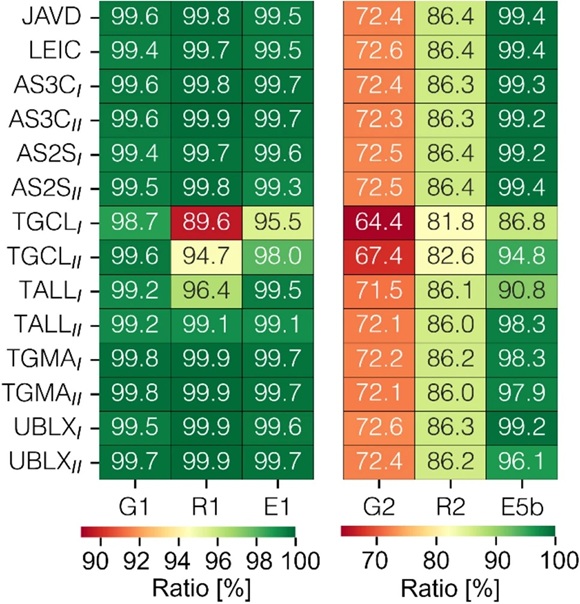
4. ArduSimple antennas maintain high acquisition ratios on primary frequencies (L1/E1/E5b), performing consistently within the top tier of the tested low-cost antennas.
5. While multipath affects all low-cost antennas more than geodetic-grade ones, AS2S and AS3C remain within the better-performing group and clearly outperform the tested helical designs.
Taken together, the figures support the conclusion that — under controlled open-sky conditions and with correct calibration — ArduSimple antennas deliver geodetic-grade positioning performance at low-cost.
 and
and